
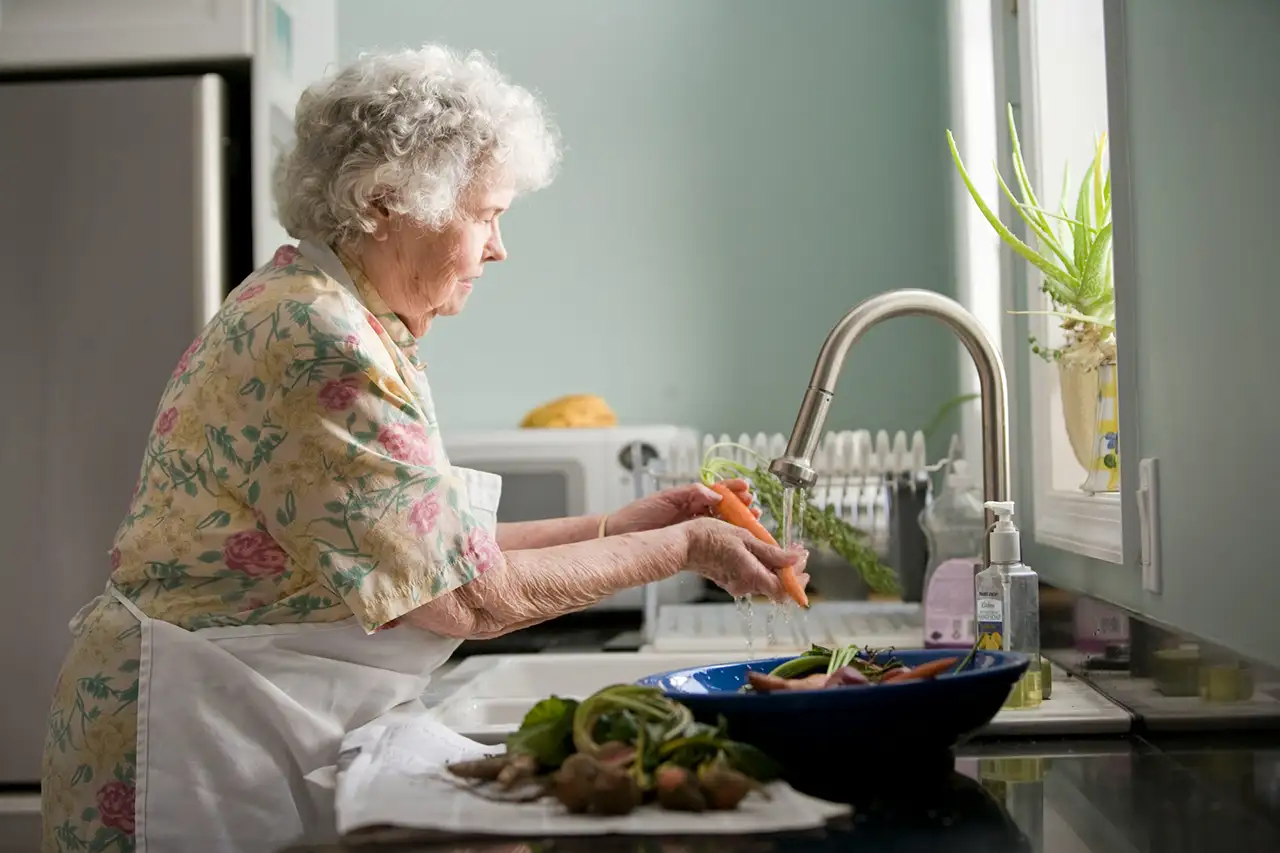
There’s a particular kind of worry that comes with having an elderly parent living alone. It doesn’t announce itself loudly. It tends to surface at 11pm when they haven’t answered a call, or on a Tuesday morning when you realise you haven’t heard from them since Saturday. It’s the background hum of not knowing.
According to the Australian Institute of Health and Welfare, 1 in 4 older Australians aged 65 and over lives alone – nearly 1 in 3 older women. That proportion rises sharply with age: by 85 and over, 41% of women and 25% of men are living alone in private dwellings. The number of people in this situation is growing as Australia’s population ages, and so is the number of families trying to work out how to ensure their parent is safe without turning their home into a monitored facility.
This guide works through the practical options available to Australian families in 2026 – from the simplest approaches to more sophisticated technology – and helps you work out what’s appropriate for your parent’s situation right now.
Table of Contents
Start with the right question
Before you think about technology, it’s worth being clear on what you’re actually trying to achieve. Most families are trying to solve one or more of these distinct problems:
Daily reassurance – knowing your parent is up, moving around, and going about their day without having to call and disturb them every morning.
Emergency detection – being alerted quickly if something serious happens, like a fall, a medical event, or no movement when there should be.
Wandering or night safety – for parents with early dementia or confusion, knowing if they’ve opened a door at an unusual hour or are moving around at 3am.
Connection and loneliness – maintaining regular contact that feels like genuine connection rather than a welfare check.
Different monitoring approaches solve different problems. No single solution solves all of them – though some come closer than others. Knowing which problem is most pressing for your family will help you choose the right starting point.
The monitoring options available to Australian families
1. Regular check-in calls and visits
The simplest approach, and still the most important one. A daily phone call or video chat is low-cost, maintains genuine connection, and gives you real information about how your parent is doing – their mood, their cognitive sharpness, whether something seems off.
The limitation is obvious: it only works if your parent answers, and it tells you nothing about what happens in the hours between calls. Many families who have experienced a fall or a health event describe receiving no answer to their usual morning call as the first sign something was wrong – which means the call itself became the detection mechanism, with all the delay that implies.
Regular calls are essential but not sufficient on their own for parents whose risk profile is increasing.
Best for: Staying connected, monitoring mood and cognition, supplementing other safety measures. Not sufficient for: Detecting falls or health events between calls.
2. Neighbour and community networks
An underused resource. If your parent has a good relationship with a neighbour, a regular arrangement – “if my curtains aren’t open by 9am, please knock” – can provide a meaningful daily check at no cost. Community groups, church communities, and local volunteer visiting programs can also provide regular informal contact.
The limitation is reliability and consistency – neighbour arrangements are goodwill-based and can lapse – and they offer no real-time alert capability if something happens overnight.
Best for: Adding a layer of human contact and informal oversight. Not sufficient for: Overnight monitoring, fall detection, parents in rural or isolated areas.
3. Personal alarm pendants and watches
A personal alarm pendant gives your parent a direct line to help at the press of a button. Modern devices go well beyond a basic alarm – 4G GPS pendants can detect their location, send SMS alerts to multiple family members, and in some cases be monitored 24/7 by a professional monitoring centre.
The Safe-Life range includes GPS pendants and watches that work across Australia on the Telstra 4G network, with no monthly monitoring fees for self-monitored use, or professional 24/7 monitoring through Securitas Australia for those who want it.
The well-documented limitation is compliance. Research shows that 32% of people stop using wearable devices within six months, and 50% within a year. Pendants sit on bedside tables during showers – exactly when falls are most likely to happen. Parents with early dementia may simply forget to put them on. And for a parent who feels they don’t need help yet, wearing a pendant can feel like an admission they’re not ready to make.
Best for: Active seniors who go out regularly, parents who are reliable about wearing a device, situations where GPS location tracking is important. Not sufficient for: Parents who refuse to wear a device, or those whose cognitive decline makes reliable compliance unlikely.
4. Passive home monitoring sensors
Passive home monitoring takes a fundamentally different approach: instead of asking your parent to do something when they need help, sensors installed around the home watch for signs that something is wrong and alert you automatically.
Motion sensors track normal daily movement patterns. A fall detection sensor in the bedroom or bathroom can identify a sudden collapse and send an immediate alert – even if your parent is unconscious. Door sensors notify you if a door opens at an unusual hour. An inactivity alert fires if there’s been no movement for longer than expected. A built-in speakerphone lets you speak directly into the home during an alert to check what’s happening before deciding whether to call for help.
The key advantage is that none of this requires anything from your parent. They don’t need to press a button, answer a call, or wear a device. The system simply watches in the background – like a smoke alarm, but for safety and wellbeing.
This is particularly well-suited to:
- Parents who consistently refuse to wear a pendant
- Parents with early to moderate dementia who may not reliably press a button in an emergency
- Parents who are physically frail and at elevated fall risk at home
- Families who live interstate and want ongoing reassurance without relying on daily calls
The limitation is that passive monitoring covers the home only – it offers no protection when your parent is out and about. Many families use both: a pendant or watch for when their parent leaves the house, and passive sensors for when they’re home alone.
Lola is an Australian passive home monitoring system launching in 2026, built specifically for this use case. It uses no cameras and no audio recording, and is managed through a smartphone app that notifies designated family members and carers when something needs attention. Register your interest at lolaapp.com.au.
Best for: Parents who won’t wear a device, those with early dementia, overnight safety, daily passive reassurance. Not sufficient for: Monitoring outside the home.
5. Smart home devices and voice assistants
Smart speakers like Amazon Echo and Google Nest can provide a low-cost layer of reassurance – your parent can ask for the time, set medication reminders, or play music. Some families set up regular check-in routines through these devices.
The limitations are significant for genuine safety monitoring. Smart speakers require your parent to interact with them, and most have no fall detection capability. Privacy is also a genuine concern – always-on microphones in a bedroom or bathroom are intrusive in ways that sensor-based systems are not.
Best for: Adding convenience and a layer of connection for tech-comfortable parents. Not sufficient for: Fall detection, overnight monitoring, or parents who find voice technology confusing.
6. Camera systems
Indoor cameras provide visual confirmation of what’s happening in the home. Some families find this reassuring; many elderly parents find it unacceptable – and understandably so. A camera in the kitchen or living room is one thing; a camera in a bedroom or bathroom is a significant privacy intrusion.
There are also practical limitations: cameras require adequate lighting, your parent needs to be within the field of view, and reviewing footage is reactive rather than proactive.
If cameras are considered, they should only ever be installed with your parent’s full knowledge, understanding, and consent. For most situations, sensor-based monitoring provides equivalent safety information without the privacy cost.
Best for: Situations where visual confirmation is specifically needed and the parent has consented. Not sufficient for: Bathrooms, bedrooms, or any parent who objects to being filmed.
How to choose the right approach
The right combination depends on three things: your parent’s current risk level, their willingness to engage with technology, and your own practical capacity to respond to alerts.
If your parent is generally well and mobile, with no significant health concerns: Start with regular calls and a personal alarm pendant for when they go out. Supplement with neighbour check-ins if possible. This is a reasonable baseline for most independent older Australians.
If your parent has had a fall, or is becoming more frail: Add passive home monitoring. The risk of a fall at home increases significantly after the first one, and passive sensors close the gap that a pendant alone leaves open – particularly in bathrooms and at night.
If your parent has early to moderate dementia: Passive monitoring is strongly indicated. Reliable button-pressing becomes increasingly uncertain as dementia progresses, and the compliance problem that affects all wearable devices is significantly worse. Door sensors for overnight wandering are also worth adding.
If your parent lives rurally or in a remote area: Both a 4G pendant (for when they’re out) and passive home monitoring are worth prioritising. Response times for emergency services are longer, which makes early detection more critical. The Telstra 4G network covers most regional Australia, but check coverage for your parent’s specific location.
If your parent actively resists monitoring: This is common, and it deserves its own conversation. See the section below.
When your parent doesn’t want to be monitored
This is one of the most common difficulties families face, and it’s worth taking seriously as more than a logistics problem. Resistance to monitoring usually reflects something real: a desire to remain in control of their own home and life, a reluctance to acknowledge increasing vulnerability, or a reasonable concern about privacy and dignity.
Some things that help:
Frame it around your anxiety, not their capability. “I worry about you and I’d sleep better knowing you’re okay” lands very differently from “I think you need to be looked after.” The first is honest and places the need on you rather than positioning them as incapable.
Start with the least intrusive option. Agreeing to a daily morning text, or a simple call routine, is a much lower bar than agreeing to sensors in the home. Once a baseline of communication is established, it’s easier to discuss additional steps if something changes.
Involve them in the choice. Showing your parent the options and letting them choose between them preserves agency. A parent who chose their monitoring setup is more likely to accept it than one who had it imposed.
Focus on falls specifically. Falls are concrete, relatable, and known to most older Australians. “If you had a fall in the bathroom and couldn’t reach your phone, how would anyone know?” is a question that tends to land – not as a threat, but as a genuine problem worth solving together.
Consider a trial. Agreeing to try something for three months, with the explicit right to remove it if they don’t like it, is far less confronting than a permanent installation.
Practical steps to get started
Once you’ve decided on an approach, a few practical steps make implementation smoother:
Check internet connectivity. Passive monitoring systems require a reliable home internet connection. If your parent’s internet is slow or unreliable, that’s worth addressing first.
Identify who receives alerts. Most systems let you nominate multiple contacts. Think about who is best placed to respond – it may not be you if you live interstate. A local sibling, a neighbour, or a home care worker may be better positioned to physically check in if needed.
Test the system together. Set up the monitoring with your parent present, walk through what happens when an alert fires, and make sure everyone knows what to do. This removes uncertainty and gives your parent a sense of control over the system.
Review regularly. Your parent’s needs will change. A monitoring setup that’s appropriate today may need to be adjusted as their health changes. Build in a regular review – every six months is a reasonable cadence.
Check NDIS eligibility. If your parent is an NDIS participant, monitoring equipment may be fundable as assistive technology under Core Supports or Assistive Technology funding. Check with their support coordinator.
A note on having the conversation early
The best time to work out a monitoring plan with your parent is before it feels urgent. When a fall or health event has already happened, the conversation happens under stress, with less time and less goodwill on all sides. Starting the conversation from a place of genuine planning – “I want to make sure we have a plan together, while everything is fine” – is much more likely to go well than having it in the aftermath of a scare.
It’s also worth discussing what your parent actually wants in an emergency – who they want contacted, whether they have preferences about hospital versus home care, and what their priorities are for maintaining independence. These are harder conversations, but having them early means the monitoring you set up actually reflects what they want, rather than what you assume they need.
Lola – passive home monitoring for elderly Australians
Lola is a new Australian passive home monitoring system designed for elderly people living independently and the families and carers who support them. It uses motion sensors, a fall detection sensor, door sensors, an emergency button, and a waterproof bathroom pendant, connected through a central gateway and managed through the Lola app.
When something needs attention, the app notifies designated family members or carers immediately. A built-in speakerphone enables two-way voice communication directly into the home. Lola uses no cameras and no audio recording, and requires nothing from the person being monitored.
Lola is launching in 2026 and is currently accepting registrations for early access.
Register your interest at lolaapp.com.au
Frequently asked questions
How do I monitor my elderly parent without them feeling watched? The key is choosing monitoring that works in the background without requiring your parent to interact with it, and being transparent about what you’re setting up and why. Sensor-based systems that detect movement and falls without cameras or microphones are the most privacy-respecting option. Framing the conversation around your own peace of mind, rather than their need for supervision, also helps.
What is the best home monitoring system for elderly Australians living alone? The best system depends on your parent’s specific situation. For active, mobile seniors, a 4G GPS pendant provides protection at home and away. For parents who are more frail, refusing to wear a device, or showing signs of cognitive decline, passive home monitoring sensors provide a layer of safety that pendants can’t. Many families use both.
Can I monitor my elderly parent remotely if I live interstate? Yes. App-based monitoring systems send real-time alerts to your smartphone wherever you are. Passive home monitoring systems provide ongoing reassurance through activity pattern data – if your parent is moving around normally, you know without needing to call. In an emergency, alerts reach you immediately and two-way voice lets you speak into the home before deciding whether to dispatch local help.
What if my parent refuses to wear a personal alarm? This is very common. Passive home monitoring is specifically designed for this situation – it requires nothing from your parent because the sensors do the work automatically. There’s nothing to wear, nothing to press, and nothing to remember.
Is monitoring an elderly parent an invasion of their privacy? It can be if it’s done without their knowledge or against their wishes. Done with their consent and using privacy-respecting technology – sensors rather than cameras, no audio recording – it’s a reasonable safety measure that most older Australians accept when it’s explained properly. The conversation matters as much as the technology.
At what point should I consider residential aged care instead of home monitoring? Home monitoring is not a substitute for care when your parent’s needs have progressed beyond what can safely be managed at home. Signs that residential care may be worth discussing include: significant cognitive decline that makes independent decision-making unsafe, repeated falls with injury, difficulty managing medications reliably, or your parent expressing that they no longer feel comfortable or safe at home. An aged care assessment through My Aged Care (myagedcare.gov.au) can help you understand what support is available and appropriate.
About the author
Rory Piper is a Melbourne-based writer and assistive technology specialist at Safe-Life Australia, a leading provider of falls prevention alarms and personal safety devices. He creates evidence-based guides on falls prevention, home monitoring, NDIS assistive technology, personal alarms and independent living for older Australians. Rory’s articles are widely read by carers, occupational therapists, aged care staff and families who need practical advice on keeping people safe at home, in hospitals and in residential care.
References and further reading
- Australian Institute of Health and Welfare (2024). Older Australians – Housing and living arrangements. AIHW, Australian Government. aihw.gov.au
- Australian Institute of Health and Welfare (2022). Falls in older Australians 2019-20: hospitalisations and deaths among people aged 65 and over. AIHW, Australian Government. aihw.gov.au
- Zieni, B., Ritchie, M.A., Mandalari, A.M., & Boem, F. (2025). An Interdisciplinary Overview on Ambient Assisted Living Systems for Health Monitoring at Home: Trade-Offs and Challenges. Sensors, 25(3), 853. doi.org/10.3390/s25030853
- My Aged Care – Australian Government aged care assessment and services. myagedcare.gov.au
Published by Lola App – Alerting Devices Australia P/L T/A Safe-Life, 5/270 Lower Dandenong Rd, Mordialloc VIC 3195. NDIS Provider Number: 4050109546.